Introduction
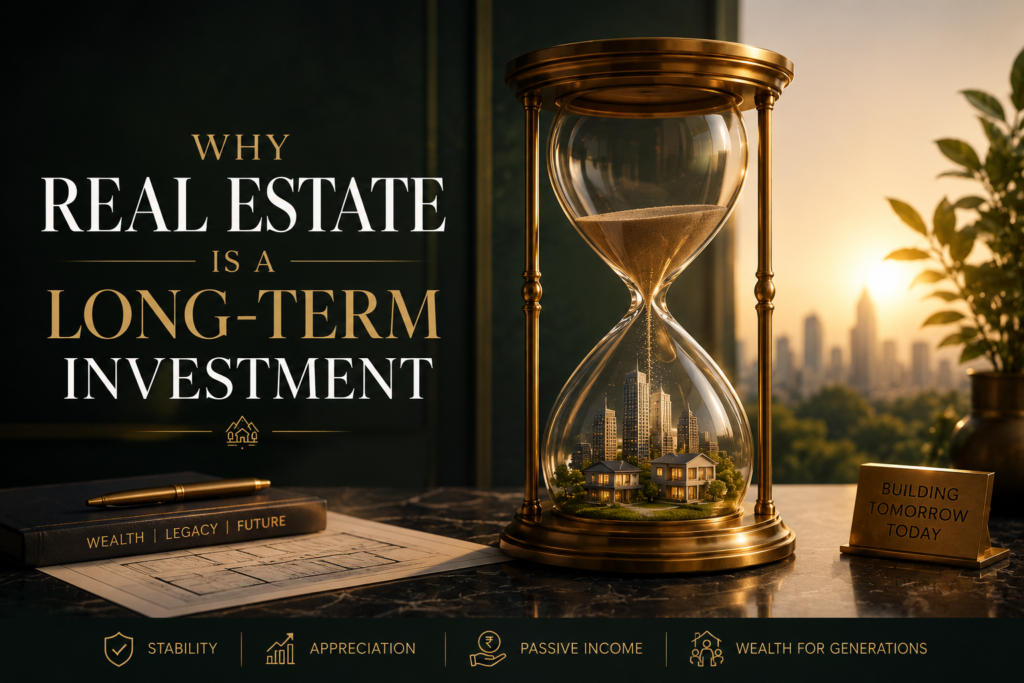
Real estate has consistently been one of the most reliable ways to create and preserve wealth. Unlike many investment options that can experience significant short-term volatility, real estate is generally considered a long-term asset that rewards patience, planning, and strategic decision-making.
Whether it’s a residential property, commercial space, plot of land, or an outstation investment, real estate has the potential to generate substantial returns over time through property appreciation, rental income, and portfolio growth. While some investors seek quick profits, the true strength of real estate lies in its ability to deliver long-term financial stability and sustainable wealth creation.
Long-Term Real Estate Investment
A long-term real estate investment typically involves purchasing a property and holding it for several years while benefiting from:
- Property value appreciation
- Rental income generation
- Market growth
- Infrastructure development
- Inflation protection
Unlike short-term speculation, long-term investing focuses on gradual and consistent wealth accumulation.
1. Property Values Appreciate Over Time
One of the biggest reasons real estate is considered a long-term investment is its tendency to appreciate in value over the years. As cities expand and infrastructure improves, demand for quality properties increases, leading to higher property prices.
Factors That Drive Appreciation
- Urban development
- Population growth
- Infrastructure projects
- Commercial expansion
- Improved connectivity
- Economic growth
While short-term market fluctuations may occur, property values generally show upward growth over the long term.
2. Generates Consistent Rental Income
Real estate offers an advantage that many investments cannot—regular income. Properties can generate rental earnings while simultaneously appreciating in value.
Rental Income Benefits
- Monthly cash flow
- Financial stability
- Passive income opportunities
- Return on investment enhancement
Whether residential or commercial, rental income helps investors earn while holding the property for future growth.
3. Protection Against Inflation
Inflation reduces the purchasing power of money over time. Real estate, however, often performs well during inflationary periods.
Why Real Estate Works as an Inflation Hedge
- Property values tend to rise with inflation.
- Rental rates generally increase over time.
- Physical assets retain intrinsic value.
This makes real estate an effective tool for preserving and growing wealth in changing economic conditions.
4. Benefits from Infrastructure Development
Many properties experience significant appreciation due to infrastructure improvements.
Examples include:
- New highways
- Metro networks
- Airports
- Business districts
- Educational institutions
- Healthcare facilities
Investors who hold properties through these development phases often benefit from substantial increases in property value.
5. Lower Volatility Compared to Many Investments
Unlike certain financial markets that may experience sharp daily fluctuations, real estate typically demonstrates greater stability.
Advantages of Lower Volatility
- Reduced investment stress
- Predictable growth patterns
- Long-term value creation
- Better risk management
Although real estate markets can fluctuate, property values generally recover and continue growing over extended periods.
6. Opportunity for Wealth Creation
Many successful investors have built significant wealth through long-term real estate ownership.
How Wealth Accumulates
- Property appreciation
- Rental income
- Equity growth
- Portfolio expansion
As property values increase, investors build equity that can be leveraged for future investments.
7. Real Estate Is a Tangible Asset
Unlike some investment instruments, real estate is a physical asset that provides both utility and value.
Benefits of Tangible Ownership
- Physical possession
- Income-generating potential
- Functional use
- Long-term security
Owning a property provides a sense of stability that many investors appreciate.
8. Increasing Demand for Housing and Commercial Spaces
Population growth and urbanization continue to create demand for real estate.
Areas of Growing Demand
- Residential housing
- Commercial offices
- Retail spaces
- Mixed-use developments
- Vacation homes
As demand rises, well-located properties often benefit from higher valuations and rental opportunities.
9. Tax Benefits and Financial Advantages
Real estate ownership often provides various financial advantages depending on local regulations.
Potential benefits may include:
- Home loan deductions
- Tax-saving opportunities
- Capital gains advantages
- Depreciation benefits for certain properties
These financial incentives can improve overall investment returns.
10. Flexibility and Multiple Income Opportunities
Real estate offers flexibility that many investments do not.
A Property Can Be Used As
- A personal residence
- A rental property
- A vacation home
- A commercial asset
- A future retirement home
This versatility increases the long-term value of property ownership.
Conclusion
Real estate remains one of the strongest long-term investment options available today. Its ability to generate consistent rental income, appreciate in value, provide inflation protection, and build lasting wealth makes it an attractive choice for investors seeking financial stability and growth.
While short-term market conditions may vary, the long-term fundamentals of real estate continue to be driven by urbanization, infrastructure development, population growth, and increasing demand for quality properties.