
r2binfra.com

Author name: r2binfra@gmail.com

Uncategorized

Why Invest in Outstation Properties?

Introduction Outstation properties refer to real estate investments made outside one’s primary city of residence. These properties can include residential plots, villas, holiday homes, farmhouses, commercial spaces, and investment land in developing regions. With improving infrastructure, enhanced connectivity, and government-led development initiatives, many outstation locations are becoming attractive investment hubs. 1. Affordable Investment Opportunities One of the biggest advantages of investing in outstation locations is affordability. Property prices in developing towns and emerging destinations are significantly lower than those in major metropolitan cities. Investors can acquire larger plots or premium properties at a fraction of the cost. 2. High Appreciation Potential Many outstation locations are witnessing rapid infrastructure development, industrial growth, and tourism expansion. As these areas continue to develop, property values tend to appreciate significantly, providing investors with excellent long-term returns. 3. Growing Demand for Second Homes The rise of remote working and changing lifestyle preferences have increased the demand for vacation homes and second residences. Many buyers are seeking peaceful locations away from city congestion, making outstation properties an attractive option. 4. Diversification of Investment Portfolio Investing in different geographical locations helps diversify your real estate portfolio and reduces dependency on a single market. This strategy can provide greater stability and risk management. 5. Better Lifestyle and Future Retirement Planning Outstation properties often offer a serene environment, cleaner surroundings, and a better quality of life. Many investors purchase such properties for future retirement or weekend getaways. Future Trends in Outstation Property Investment Several trends are driving the growth of outstation real estate: Remote Work Culture The flexibility of remote work has encouraged professionals to relocate to quieter and more affordable destinations. Infrastructure Expansion New highways, expressways, airports, and railway projects are improving accessibility to previously overlooked locations. Tourism-Led Development Tourist destinations continue to attract investors interested in vacation rentals and hospitality ventures. Rising Demand for Wellness Living People increasingly prefer healthier environments with open spaces, cleaner air, and reduced congestion. Conclusion The key to successful investment lies in choosing locations with strong infrastructure growth, future development plans, and increasing demand. Whether you are looking for a holiday home, a retirement property, or a long-term investment, outstation real estate can provide substantial returns and valuable opportunities.

Uncategorized

Best Outstation Locations for Property Investment in India

Introduction Real estate investment has always been one of the most reliable ways to build wealth. While metropolitan cities continue to attract investors, outstation property investments have gained significant popularity in recent years. Buyers are increasingly looking beyond crowded urban centers and exploring opportunities in emerging destinations that offer affordability, high growth potential, and a better quality of life. Best Outstation Locations for Property Investment 1. Rishikesh, Uttarakhand Rishikesh has become one of the most sought-after destinations for real estate investment. Known for its natural beauty, spiritual significance, and adventure tourism, the city attracts both domestic and international visitors. Why Invest in Rishikesh? Investors looking for vacation homes and rental income opportunities often find Rishikesh highly attractive. 2. Dehradun, Uttarakhand Dehradun has transformed into a major educational, residential, and commercial hub. Its pleasant climate and expanding infrastructure make it a preferred destination for both end-users and investors. Investment Advantages Property prices continue to show healthy appreciation as the city expands. 3. Goa Goa remains one of India’s most popular destinations for holiday home investments. The state’s thriving tourism industry creates strong demand for short-term rentals and vacation properties. Why Investors Choose Goa Goa is particularly suitable for investors interested in hospitality-related real estate. 4. Jaipur, Rajasthan Jaipur has emerged as a rapidly developing real estate market due to industrial expansion, infrastructure improvements, and growing business opportunities. Benefits of Investing in Jaipur The city offers both residential and commercial investment opportunities. 5. Chandigarh Region Chandigarh and its surrounding areas continue to attract investors due to planned development, quality infrastructure, and high living standards. Investment Highlights Nearby emerging sectors and townships offer excellent growth prospects. 6. Shimla, Himachal Pradesh Shimla remains a popular hill station investment destination. Demand for holiday homes and hospitality properties continues to increase. Reasons to Invest Investors seeking lifestyle and leisure-based properties often prefer Shimla. 7. Nainital, Uttarakhand Nainital has become an attractive destination for second-home buyers and real estate investors. Advantages Properties near lakes and tourist attractions generally experience stronger demand. 8. Alibaug, Maharashtra Alibaug is increasingly becoming a preferred investment destination for buyers from Mumbai and surrounding regions. Why Alibaug Stands Out The area’s premium property market continues to attract high-net-worth investors. Key Factors to Consider Before Investing Before selecting an outstation property, investors should evaluate: Careful research can help maximize returns while minimizing risks. Conclusion Outstation property investment offers an excellent opportunity to achieve long-term wealth creation, portfolio diversification, and lifestyle benefits. Locations such as Rishikesh, Dehradun, Goa, Jaipur, Chandigarh, Shimla, Nainital, and Alibaug are emerging as some of the most promising destinations for real estate investors.

Uncategorized

High ROI Property Investment Opportunities

Introduction Real estate remains one of the most trusted and rewarding investment options for building long-term wealth. While market trends may fluctuate, strategically chosen properties can deliver impressive returns through capital appreciation, rental income, and future resale value. For investors seeking maximum profitability, identifying high ROI (Return on Investment) property opportunities is essential. A high ROI property is one that generates substantial returns compared to the initial investment cost. Whether you’re a first-time investor or an experienced buyer, understanding where and how to invest can significantly impact your financial success. What is ROI in Real Estate? ROI, or Return on Investment, measures the profitability of a property investment. It helps investors evaluate whether a property is generating sufficient returns relative to its purchase price and associated costs. A property’s ROI can come from: The higher the ROI, the more profitable the investment becomes over time. High ROI Property Investment Opportunities 1. Residential Plots Residential plots are among the most profitable real estate investments due to their lower maintenance costs and high appreciation potential. Benefits Plots in developing corridors often outperform built properties in terms of capital growth. 2. Commercial Properties Commercial real estate typically offers higher rental yields than residential properties. Advantages Commercial spaces in emerging business districts often generate attractive returns. 3. Outstation Investment Properties Investing in emerging destinations outside major metropolitan cities has become increasingly popular. Why Investors Prefer Outstation Properties Many investors are discovering excellent ROI opportunities in rapidly developing regions. 4. Vacation Homes The demand for vacation rentals has increased significantly in recent years. Benefits Properties located in popular tourist destinations often deliver strong returns. 5. Pre-Launch and Under-Construction Projects Investing during the early stages of development often allows buyers to purchase at lower prices. Investment Benefits Choosing reputable developers is crucial for maximizing returns and reducing risk. Common Mistakes Investors Should Avoid Avoiding these mistakes can significantly improve investment outcomes. Conclusion High ROI property investments are built on careful planning, market knowledge, and strategic location selection. Whether you’re considering residential plots, commercial properties, vacation homes, or outstation investments, focusing on growth potential and future demand can help maximize returns. The most successful investors identify opportunities early, invest in promising locations, and maintain a long-term perspective. With the right approach, real estate can become a powerful asset for generating wealth and achieving financial goals.

Uncategorized

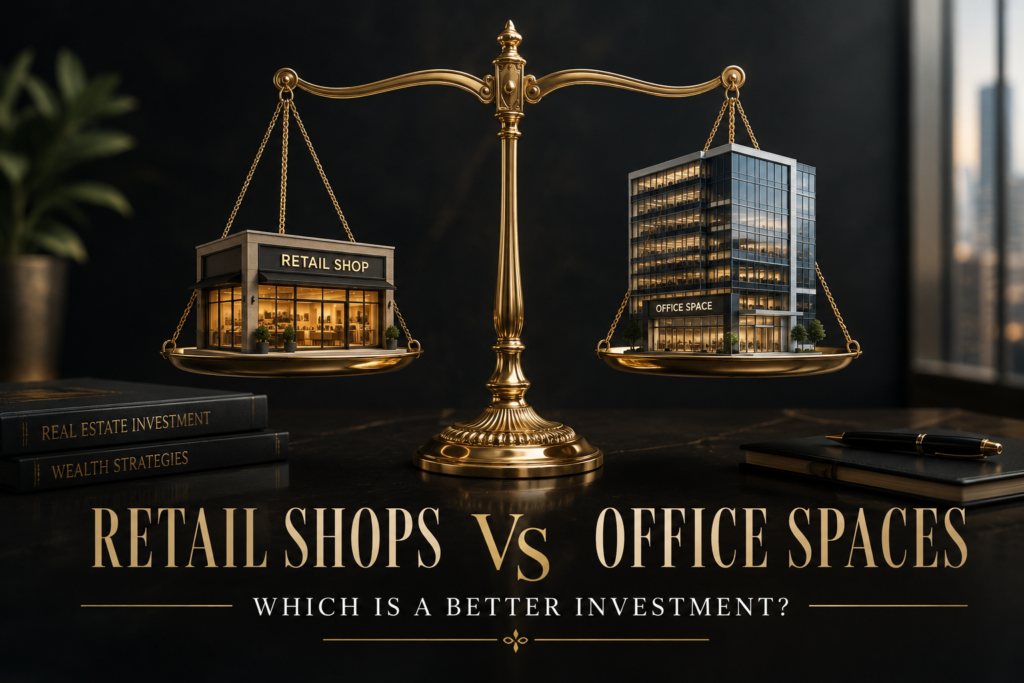
Retail Shops vs Office Spaces: Which Is a Better Investment?

Introduction Commercial real estate has become one of the most attractive investment avenues for individuals seeking steady income and long-term wealth creation. Among the various commercial property options available, retail shops and office spaces are two of the most popular choices. Both offer unique advantages and can generate attractive returns, but choosing the right investment depends on your financial goals, risk appetite, and market conditions. Understanding Retail Shop Investments Retail shops are commercial spaces leased to businesses that sell products or services directly to customers. These properties are commonly located in shopping complexes, high streets, commercial markets, and mixed-use developments. Examples of Retail Businesses Retail properties generate income through rental payments made by tenants operating their businesses. Understanding Office Space Investments Office spaces are commercial units leased to companies, startups, professionals, and corporate organizations for conducting business operations. Examples of Office Occupants Office properties are generally located in business districts, commercial hubs, and corporate parks. Comparing Retail Shops and Office Spaces 1. Rental Income Potential Retail Shops Retail shops often command higher rental rates per square foot, especially in prime commercial locations with strong foot traffic. Advantages However, rental income may fluctuate depending on consumer spending patterns and business performance. Office Spaces Office spaces generally provide stable and predictable rental income through long-term lease agreements. Advantages Winner: Retail shops may offer higher rental yields in prime locations, while office spaces provide greater rental stability. 2. Capital Appreciation Retail Shops Retail properties located in developing commercial corridors often experience significant appreciation as business activity increases. Office Spaces Office properties appreciate steadily, particularly in growing business districts and emerging corporate hubs. Factors driving appreciation include: Winner: Both can appreciate well, but retail shops in premium locations often experience faster value growth. 3. Tenant Stability Retail Shops Tenant turnover can be higher because retail businesses are influenced by market competition and changing consumer preferences. Office Spaces Corporate tenants usually sign longer lease agreements and are more likely to remain in the same location for extended periods. Benefits include: Winner: Office spaces offer greater tenant stability. 4. Demand and Market Trends Retail Shops Despite the growth of e-commerce, physical retail continues to thrive in many sectors, including: High-footfall locations remain highly desirable for retailers. Office Spaces The office market continues to evolve with growing demand from: The growth of hybrid work models has influenced office demand, but quality office spaces remain valuable assets. Winner: Both sectors continue to perform well, depending on location and market demand. 5. Risk Factors Retail Shop Risks Office Space Risks Winner: Office spaces generally involve slightly lower operational risk due to longer lease commitments. 6. Maintenance and Management Retail Shops Retail tenants often customize interiors and may require periodic modifications. Office Spaces Office properties usually have structured maintenance systems, especially in commercial complexes and business parks. Professional management often ensures: Winner: Office spaces are generally easier to manage. When Should You Invest in Retail Shops? Retail shops may be the right choice if you: Retail investments perform best in: When Should You Invest in Office Spaces? Office spaces may be ideal if you: Office investments perform best in: Conclusion Both retail shops and office spaces can be profitable commercial real estate investments when selected carefully. Retail shops often provide higher rental yields and stronger appreciation in high-traffic locations, while office spaces offer stability, longer lease terms, and predictable income. The best investment depends on your financial goals, risk tolerance, and market conditions. Investors seeking aggressive growth may prefer retail properties, while those prioritizing steady returns may find office spaces more suitable.

Uncategorized

Smart Home Technology and the Future of Real Estate

Introduction Technology is transforming every aspect of our lives, and the real estate industry is no exception. Modern homebuyers are no longer looking solely for spacious layouts, attractive locations, or premium amenities. Today’s buyers want homes that offer convenience, security, energy efficiency, and seamless connectivity. This growing demand has led to the rapid adoption of smart home technology in residential real estate. Smart homes use internet-connected devices and automated systems to control various household functions such as lighting, security, temperature, entertainment, and appliances. As technology continues to evolve, smart homes are becoming a key factor influencing property values, buyer preferences, and future real estate developments. What Is Smart Home Technology? Smart home technology refers to a network of connected devices that can be monitored, controlled, and automated through smartphones, tablets, voice assistants, or centralized systems. These technologies enable homeowners to manage different aspects of their homes remotely and efficiently. Common Smart Home Features These innovations create a more convenient and personalized living experience. Why Smart Homes Are Becoming Popular The increasing adoption of smart technology is driven by changing consumer expectations and advancements in digital infrastructure. 1. Convenience and Automation Homeowners can control lighting, appliances, security systems, and temperature settings from anywhere using mobile devices. Simple tasks that once required manual effort can now be automated based on schedules or personal preferences. 2. Enhanced Security Security remains one of the biggest reasons people invest in smart home systems. Features such as: provide homeowners with greater peace of mind and protection. 3. Energy Efficiency Smart technology helps reduce energy consumption by optimizing the use of electricity and resources. Examples include: This results in lower utility bills and a more sustainable lifestyle. 4. Better Lifestyle Experience Smart homes offer a level of comfort and personalization that traditional homes cannot match. Residents can create customized settings for: creating a seamless living environment. Key Smart Technologies Shaping the Future of Real Estate 1. Artificial Intelligence (AI) Artificial intelligence is making smart homes more intelligent and responsive. AI-powered systems can: These capabilities improve both convenience and efficiency. 2. Internet of Things (IoT) The Internet of Things (IoT) connects multiple devices and systems within a home. Examples include: IoT allows devices to communicate and work together seamlessly. 3. Voice-Controlled Living Voice assistants have become an integral part of smart homes. Residents can control various functions through simple voice commands, including: This hands-free convenience is becoming a standard expectation among modern buyers. 4. Smart Security Systems Future homes will feature increasingly sophisticated security technologies. Emerging innovations include: These systems significantly improve home safety. 5. Energy Management and Sustainability Environmental awareness is encouraging the adoption of sustainable technologies. Smart homes can monitor and optimize: This contributes to lower costs and reduced environmental impact. The Future of Smart Homes in Real Estate The future of real estate is closely linked with technology innovation. Experts predict that future residential developments will increasingly incorporate: As these technologies become more affordable and accessible, smart homes are expected to become a standard feature rather than a luxury. Why Smart Homes Matter for Investors For real estate investors, smart-enabled properties offer several advantages: Properties equipped with modern technologies are likely to remain competitive and attractive for years to come. Conclusion Smart home technology is revolutionizing the way people live, interact with their homes, and make property purchasing decisions. From enhanced security and energy efficiency to greater convenience and automation, smart homes offer benefits that align perfectly with modern lifestyle expectations. As technology continues to evolve, its integration into residential real estate will only become stronger. Developers, investors, and homeowners who embrace smart home innovations today are positioning themselves for the future of the property market.

Uncategorized

Interior Design Trends That Add Value to Your Property

Introduction When it comes to increasing the value of a property, location and infrastructure are often considered the most important factors. However, interior design also plays a significant role in enhancing a property’s appeal and market value. A well-designed interior not only creates a comfortable and functional living space but also leaves a lasting impression on potential buyers and tenants. In today’s competitive real estate market, buyers are looking for homes that combine style, comfort, and practicality. Modern interior design trends can help homeowners maximize their property’s value while creating a more attractive and enjoyable living environment. Whether you are planning to sell your property, rent it out, or simply improve its overall appeal, investing in the right interior upgrades can deliver excellent returns. Let’s explore the latest interior design trends that can add significant value to your property. Why Interior Design Matters in Real Estate A property’s interior is often the first thing buyers notice during a viewing. A thoughtfully designed space can influence purchasing decisions and even justify a higher asking price. Benefits of Good Interior Design Modern buyers are increasingly attracted to homes that feel move-in ready and require minimal renovation. 1. Open and Spacious Layouts One of the most sought-after design trends today is the open-concept layout. Why It Adds Value Open spaces create a sense of: Combining living rooms, dining areas, and kitchens into a seamless space makes a property feel more modern and welcoming. Popular Features Homes with spacious layouts often attract a broader range of buyers. 2. Smart Home Integration Technology has become an essential component of modern living. Smart Features That Increase Property Value These features offer convenience, security, and energy efficiency, making properties more attractive to today’s buyers. 3. Neutral and Timeless Color Palettes While bold colors may appeal to personal tastes, neutral tones tend to attract more buyers. Popular Color Choices Neutral colors create a clean and elegant appearance while allowing buyers to envision their own style within the space. Benefits 4. Sustainable and Eco-Friendly Design Sustainability is becoming a major consideration in real estate and interior design. Eco-Friendly Features Environmentally conscious design not only reduces utility costs but also appeals to modern buyers who value sustainable living. 5. Premium Kitchen Designs The kitchen is often considered the heart of a home and can significantly impact property value. Trending Kitchen Features A modern, functional kitchen can greatly enhance a property’s marketability. Why It Matters Buyers often prioritize kitchens when evaluating a property. An upgraded kitchen can deliver one of the highest returns on investment. 6. Luxury Bathroom Upgrades Bathrooms have evolved from purely functional spaces into personal wellness retreats. Popular Bathroom Trends Well-designed bathrooms create a sense of luxury and increase buyer interest. 7. Natural Lighting and Large Windows Natural light is one of the most desirable features in any property. Benefits Design Strategies Properties with abundant natural light often command higher prices. 8. Multi-Functional Spaces Changing lifestyles and remote work trends have increased demand for flexible living spaces. Examples Multi-purpose rooms offer greater practicality and appeal to modern homeowners. 9. High-Quality Flooring Flooring plays a major role in the overall look and feel of a property. Popular Flooring Options Quality flooring enhances durability, aesthetics, and perceived property value. 10. Minimalist Design Minimalism continues to dominate modern interior design trends. Characteristics Minimalist interiors create a sophisticated and spacious appearance that appeals to a wide audience. 11. Customized Storage Solutions Storage is a top priority for many homebuyers. Value-Adding Storage Features Efficient storage solutions improve functionality and help maximize available space. 12. Outdoor Living Areas Outdoor spaces are increasingly viewed as extensions of indoor living areas. Popular Features Well-designed outdoor areas enhance lifestyle appeal and increase property desirability. 13. Statement Lighting Lighting is no longer just a practical necessity—it has become a major design feature. Trending Lighting Styles Strategic lighting improves ambiance and highlights key design elements. 14. Natural Materials and Textures Modern interior design increasingly embraces natural elements. Popular Materials These materials add warmth, elegance, and timeless appeal to interior spaces. Conclusion Interior design is far more than aesthetics—it is a powerful tool for increasing property value, enhancing buyer appeal, and improving overall functionality. From open layouts and smart home technology to premium kitchens and sustainable design elements, today’s interior trends are shaping the future of real estate. Whether you are preparing a property for sale, looking to attract tenants, or investing in long-term value, incorporating modern design features can significantly boost your property’s market potential.

Uncategorized

Residential, Commercial vs Outstation Properties: Which Is Better?

Introduction Real estate has long been considered one of the most reliable and rewarding investment options. Whether you are a first-time investor or someone looking to expand your portfolio, choosing the right type of property is one of the most important decisions you will make. Today, investors have multiple options available, with residential properties, commercial properties, and outstation properties being among the most popular choices. Each category offers unique benefits, risks, and return potential. The ideal investment depends on your financial goals, budget, risk tolerance, and investment horizon. Residential Properties Residential properties are designed primarily for living purposes. They include apartments, villas, independent houses, residential plots, and gated community homes. Common Residential Property Types Residential real estate remains one of the most preferred investment options because of its stability and consistent demand. Commercial Properties Commercial properties are intended for business activities and income generation. These properties are leased to businesses, professionals, retailers, and organizations. Common Commercial Property Types Commercial investments are often chosen for their higher rental income potential. Outstation Properties Outstation properties refer to real estate investments made outside major metropolitan areas or the investor’s primary city of residence. These may include: Outstation investments are becoming increasingly popular due to affordability and future growth opportunities. Comparing Residential, Commercial, and Outstation Properties 1. Initial Investment Requirement Residential Properties Residential properties typically offer a wide range of price points, making them accessible to both first-time and experienced investors. Advantages Commercial Properties Commercial units generally require a higher initial investment. Advantages Outstation Properties Outstation properties often provide the most affordable entry point. Advantages 2. Rental Income Potential Residential Properties Residential properties generate steady rental income but generally offer moderate rental yields. Benefits Commercial Properties Commercial real estate usually delivers higher rental yields compared to residential properties. Benefits Outstation Properties Rental income depends heavily on location and demand. Vacation destinations may generate seasonal rental income, while undeveloped land may not produce immediate returns. 3. Capital Appreciation Residential Properties Residential property values generally appreciate steadily over time, especially in growing urban areas. Commercial Properties Commercial properties appreciate based on business activity, infrastructure growth, and market demand. Outstation Properties Outstation properties often experience significant appreciation when infrastructure projects, tourism growth, or urban expansion reach the area. 4. Investment Risk Residential Properties Residential investments are generally considered the safest option. Reasons include: Commercial Properties Commercial investments involve higher risks because demand is influenced by business performance and economic conditions. Outstation Properties Outstation investments can carry risks related to slower development timelines and uncertain growth patterns. 5. Tenant Stability Residential Properties Residential tenants may relocate more frequently due to personal circumstances. Commercial Properties Businesses often sign longer leases and prefer stability. Outstation Properties Tenant demand varies significantly depending on the property’s location and purpose. 6. Maintenance Requirements Residential Properties Regular maintenance is necessary to keep residential units attractive and functional. Commercial Properties Commercial buildings often have professional maintenance systems, though costs may be higher. Outstation Properties Land investments usually require minimal maintenance. 7. Liquidity and Resale Potential Residential Properties Residential properties generally attract a larger pool of buyers, making resale easier. Commercial Properties Commercial properties may take longer to sell due to higher investment amounts. Outstation Properties Resale depends heavily on location, infrastructure growth, and market demand. Advantages of Residential Property Investment Why Investors Choose Residential Properties Residential properties are ideal for investors seeking long-term security and predictable growth. Advantages of Commercial Property Investment Why Investors Choose Commercial Properties Commercial real estate is often preferred by investors focused on income generation. Advantages of Outstation Property Investment Why Investors Choose Outstation Properties Outstation properties can provide excellent long-term rewards for patient investors. Conclusion There is no single answer to whether residential, commercial, or outstation properties are the best investment. Each category serves different financial goals and investment strategies. Residential properties provide stability and lower risk, commercial properties offer higher rental income, and outstation properties present exciting opportunities for future appreciation and diversification. The best investment is the one that aligns with your budget, objectives, and long-term vision. By carefully evaluating market trends, location advantages, and growth potential, investors can make informed decisions that lead to lasting financial success.

Uncategorized

Things to Check Before Buying a Property

Introduction Buying a property is one of the most significant financial decisions a person makes in their lifetime. Whether you are purchasing a home for your family, investing in real estate, or planning for future financial growth, making an informed decision is essential. While a property may appear attractive on the surface, there are several important factors that should be carefully evaluated before finalizing the purchase. A thorough property assessment can help you avoid legal complications, financial losses, and future disappointments. From verifying legal documents to evaluating the location and future growth potential, every detail matters. 1. Verify Property Ownership The first and most important step is confirming that the seller has clear and legal ownership of the property. What to Check A clear title ensures that the property is free from ownership disputes and can be legally transferred to the buyer. Why It Matters Purchasing a property with unclear ownership can result in legal complications and financial losses. 2. Check Legal Approvals and Documentation Every property should have the necessary approvals from relevant authorities. Important Documents to Verify Ensure all approvals are valid and up to date before proceeding. 3. Verify Land and Property Title A property’s title should be clear and marketable. Key Points Consulting a legal expert can provide additional assurance. 4. Check for Encumbrances An encumbrance refers to any legal or financial liability attached to the property. Examples Include Always request an encumbrance certificate or equivalent verification document to ensure the property is free from financial obligations. 5. Evaluate the Location Location remains one of the most important factors in real estate. Consider the Following A well-connected location often offers better appreciation and resale value. 6. Assess Future Development Potential A property’s future value is often influenced by upcoming infrastructure and development projects. Look For Properties located in growth corridors often experience significant appreciation over time. 7. Research the Developer’s Reputation If purchasing from a developer or builder, evaluate their track record carefully. Factors to Consider A trusted developer reduces the risk of project delays and quality concerns. 8. Inspect Construction Quality The quality of construction directly affects safety, maintenance costs, and long-term value. Areas to Examine Professional inspections can help identify hidden issues before purchase. 9. Check Property Age and Condition For resale properties, understanding the property’s age and maintenance history is important. Questions to Ask Older properties may require additional maintenance investments. 10. Understand the Total Cost Many buyers focus only on the property’s purchase price and overlook additional expenses. Additional Costs May Include Calculating the total investment helps avoid budget surprises. Conclusion Buying a property is a major milestone that requires careful planning, research, and evaluation. From verifying ownership documents and legal approvals to assessing location, construction quality, and future growth potential, every step plays a crucial role in protecting your investment. A well-informed purchase not only provides peace of mind but also ensures long-term financial benefits and property appreciation. By following these essential checks, buyers can avoid common pitfalls and make smarter real estate decisions.

Uncategorized

Benefits of Owning an Outstation Property

Introduction The real estate market is evolving, and so are the preferences of property buyers and investors. While residential and commercial properties in major cities continue to attract attention, outstation properties have emerged as a popular investment choice for those seeking affordability, long-term growth, and lifestyle benefits. An outstation property is a real estate investment located outside your primary city of residence, often in developing towns, tourist destinations, hill stations, or emerging growth corridors. These properties can include residential plots, vacation homes, farmhouses, villas, and land parcels. With improved infrastructure, better connectivity, and changing lifestyle preferences, owning an outstation property is no longer just a luxury—it is becoming a smart investment strategy. What Is an Outstation Property? Outstation properties are located away from crowded metropolitan areas and are typically found in: Many investors purchase these properties for future appreciation, personal use, rental income, or retirement planning. 1. Affordable Investment Opportunity One of the biggest advantages of owning an outstation property is affordability. Compared to major cities, property prices in emerging destinations are often significantly lower, allowing investors to purchase larger plots or premium properties within a reasonable budget. Benefits This affordability makes outstation properties ideal for first-time investors and those looking to diversify their investments. 2. High Appreciation Potential Many outstation locations are undergoing rapid transformation due to infrastructure development, tourism growth, and urban expansion. As roads, airports, highways, and commercial projects improve connectivity, property values in these areas often increase substantially. Factors Driving Appreciation Investing early in developing locations can result in significant long-term capital gains. 3. A Perfect Vacation Home Owning an outstation property gives you a personal getaway whenever you need a break from city life. Whether it’s a hill station retreat, a riverside villa, or a countryside farmhouse, having your own vacation property provides comfort, privacy, and convenience. Advantages Instead of spending on hotels and resorts, homeowners can enjoy their own property whenever they choose. 4. Additional Rental Income Many outstation properties, particularly those located in tourist destinations, offer excellent rental opportunities. Vacation homes and holiday rentals are increasingly popular among travelers looking for unique and comfortable accommodations. Income Sources A well-located property can generate attractive rental income while continuing to appreciate in value. 5. Portfolio Diversification Experienced investors understand the importance of diversification. Owning an outstation property allows you to spread your investments across different geographical markets rather than relying solely on properties in one city. Benefits Diversification helps protect investors from fluctuations in any single real estate market. 6. Better Lifestyle and Quality of Life Many outstation locations offer a healthier and more peaceful environment than busy urban centers. Lifestyle Benefits These advantages make outstation properties attractive for both personal use and future retirement plans. 7. Ideal for Retirement Planning An outstation property can serve as an excellent retirement home. Many retirees prefer quieter destinations that offer a relaxed lifestyle, natural surroundings, and lower living costs. Why It Works Planning ahead allows investors to secure a future home while benefiting from property appreciation over time. 8. Growing Demand for Second Homes The concept of owning a second home has become increasingly popular. Remote work, flexible lifestyles, and changing travel habits have encouraged people to invest in properties outside major cities. Reasons for Rising Demand This growing demand contributes to stronger property appreciation and rental prospects. 9. Lower Population Density Unlike densely populated urban areas, many outstation destinations offer more space and privacy. Benefits For families seeking a healthier and more comfortable living environment, these qualities are highly attractive. 10. Future Infrastructure Development Many emerging destinations are receiving substantial government and private investment. Projects such as: can significantly improve accessibility and increase property values. Investors who purchase before major developments are completed often benefit the most. Conclusion Owning an outstation property offers far more than just an additional real estate asset. It provides affordability, future appreciation potential, rental income opportunities, lifestyle benefits, and portfolio diversification. As infrastructure continues to improve and demand for second homes grows, outstation properties are becoming an increasingly attractive investment option for modern buyers. Whether you’re looking for a vacation retreat, a retirement home, or a long-term wealth-building opportunity, investing beyond city limits can unlock significant rewards.

Uncategorized

Why Real Estate Is a Long-Term Investment

Introduction Real estate has consistently been one of the most reliable ways to create and preserve wealth. Unlike many investment options that can experience significant short-term volatility, real estate is generally considered a long-term asset that rewards patience, planning, and strategic decision-making. Whether it’s a residential property, commercial space, plot of land, or an outstation investment, real estate has the potential to generate substantial returns over time through property appreciation, rental income, and portfolio growth. While some investors seek quick profits, the true strength of real estate lies in its ability to deliver long-term financial stability and sustainable wealth creation. Long-Term Real Estate Investment A long-term real estate investment typically involves purchasing a property and holding it for several years while benefiting from: Unlike short-term speculation, long-term investing focuses on gradual and consistent wealth accumulation. 1. Property Values Appreciate Over Time One of the biggest reasons real estate is considered a long-term investment is its tendency to appreciate in value over the years. As cities expand and infrastructure improves, demand for quality properties increases, leading to higher property prices. Factors That Drive Appreciation While short-term market fluctuations may occur, property values generally show upward growth over the long term. 2. Generates Consistent Rental Income Real estate offers an advantage that many investments cannot—regular income. Properties can generate rental earnings while simultaneously appreciating in value. Rental Income Benefits Whether residential or commercial, rental income helps investors earn while holding the property for future growth. 3. Protection Against Inflation Inflation reduces the purchasing power of money over time. Real estate, however, often performs well during inflationary periods. Why Real Estate Works as an Inflation Hedge This makes real estate an effective tool for preserving and growing wealth in changing economic conditions. 4. Benefits from Infrastructure Development Many properties experience significant appreciation due to infrastructure improvements. Examples include: Investors who hold properties through these development phases often benefit from substantial increases in property value. 5. Lower Volatility Compared to Many Investments Unlike certain financial markets that may experience sharp daily fluctuations, real estate typically demonstrates greater stability. Advantages of Lower Volatility Although real estate markets can fluctuate, property values generally recover and continue growing over extended periods. 6. Opportunity for Wealth Creation Many successful investors have built significant wealth through long-term real estate ownership. How Wealth Accumulates As property values increase, investors build equity that can be leveraged for future investments. 7. Real Estate Is a Tangible Asset Unlike some investment instruments, real estate is a physical asset that provides both utility and value. Benefits of Tangible Ownership Owning a property provides a sense of stability that many investors appreciate. 8. Increasing Demand for Housing and Commercial Spaces Population growth and urbanization continue to create demand for real estate. Areas of Growing Demand As demand rises, well-located properties often benefit from higher valuations and rental opportunities. 9. Tax Benefits and Financial Advantages Real estate ownership often provides various financial advantages depending on local regulations. Potential benefits may include: These financial incentives can improve overall investment returns. 10. Flexibility and Multiple Income Opportunities Real estate offers flexibility that many investments do not. A Property Can Be Used As This versatility increases the long-term value of property ownership. Conclusion Real estate remains one of the strongest long-term investment options available today. Its ability to generate consistent rental income, appreciate in value, provide inflation protection, and build lasting wealth makes it an attractive choice for investors seeking financial stability and growth. While short-term market conditions may vary, the long-term fundamentals of real estate continue to be driven by urbanization, infrastructure development, population growth, and increasing demand for quality properties.

Uncategorized

Why Commercial Properties Are a Smart Investment

Introduction Real estate has long been recognized as one of the most reliable avenues for wealth creation, and among its various segments, commercial properties stand out as a particularly attractive investment option. Whether it’s retail shops, office spaces, showrooms, business parks, or mixed-use developments, commercial real estate offers unique advantages that appeal to both seasoned and first-time investors. As businesses continue to expand and urban centers evolve, the demand for well-located commercial spaces remains strong. Commercial properties not only provide opportunities for consistent rental income but also offer significant long-term appreciation potential. What Are Commercial Properties? Commercial properties are real estate assets used for business purposes rather than residential living. Common Types of Commercial Properties These properties are leased to businesses, organizations, and professionals who use them to conduct their operations. Why Commercial Real Estate Is Gaining Popularity The commercial real estate sector continues to attract investors because of its income-generating potential and strong market demand. Key Drivers As economies grow, commercial real estate often becomes an essential part of that development. 1. Higher Rental Income Potential One of the biggest advantages of commercial properties is their ability to generate higher rental income compared to many residential properties. Why Commercial Rentals Are Higher For investors seeking regular cash flow, commercial properties can provide attractive rental yields. 2. Long-Term Lease Agreements Commercial tenants generally prefer long-term leases to ensure business stability. Benefits of Longer Lease Terms Many businesses invest in interior customization and operational setups, making them more likely to stay for extended periods. 3. Strong Capital Appreciation Commercial properties located in growing business districts often experience significant appreciation over time. Factors Driving Appreciation As demand for commercial spaces rises, property values often increase substantially. 4. Professional Tenant Base Commercial tenants are typically businesses and professionals who understand the importance of maintaining a positive reputation. Advantages This often results in a smoother investment experience for property owners. 5. Diversification of Investment Portfolio A diversified portfolio helps reduce investment risk. Adding commercial properties alongside residential and outstation investments can provide balance and stability. Benefits of Diversification Commercial real estate offers a valuable opportunity to strengthen an investment portfolio. 6. Growing Demand for Office Spaces Despite changes in workplace trends, demand for quality office spaces remains strong. Key Occupiers Modern office spaces equipped with advanced facilities continue to attract businesses seeking productive work environments. Important Factors to Consider Before Investing Before purchasing a commercial property, investors should evaluate: Location Prime locations with strong business activity typically perform best. Connectivity Accessibility influences tenant demand and property value. Market Demand Study local occupancy rates and business growth trends. Developer Reputation Choose properties developed by trusted and experienced builders. Future Infrastructure Upcoming projects can significantly impact appreciation potential. Legal Verification Ensure all property documents and approvals are in order. Common Mistakes to Avoid Avoid These Errors Proper due diligence is essential for long-term success. Conclusion Commercial properties offer a powerful combination of higher rental income, long-term tenant stability, strong appreciation potential, and portfolio diversification. As businesses continue to grow and infrastructure development accelerates, commercial real estate remains one of the most attractive investment options for individuals seeking long-term wealth creation. Whether you’re considering a retail shop, office space, showroom, or commercial plot, investing in the right location and property type can generate substantial financial rewards over time.

Scroll to Top