Introduction
Technology is transforming every aspect of our lives, and the real estate industry is no exception. Modern homebuyers are no longer looking solely for spacious layouts, attractive locations, or premium amenities. Today’s buyers want homes that offer convenience, security, energy efficiency, and seamless connectivity. This growing demand has led to the rapid adoption of smart home technology in residential real estate.
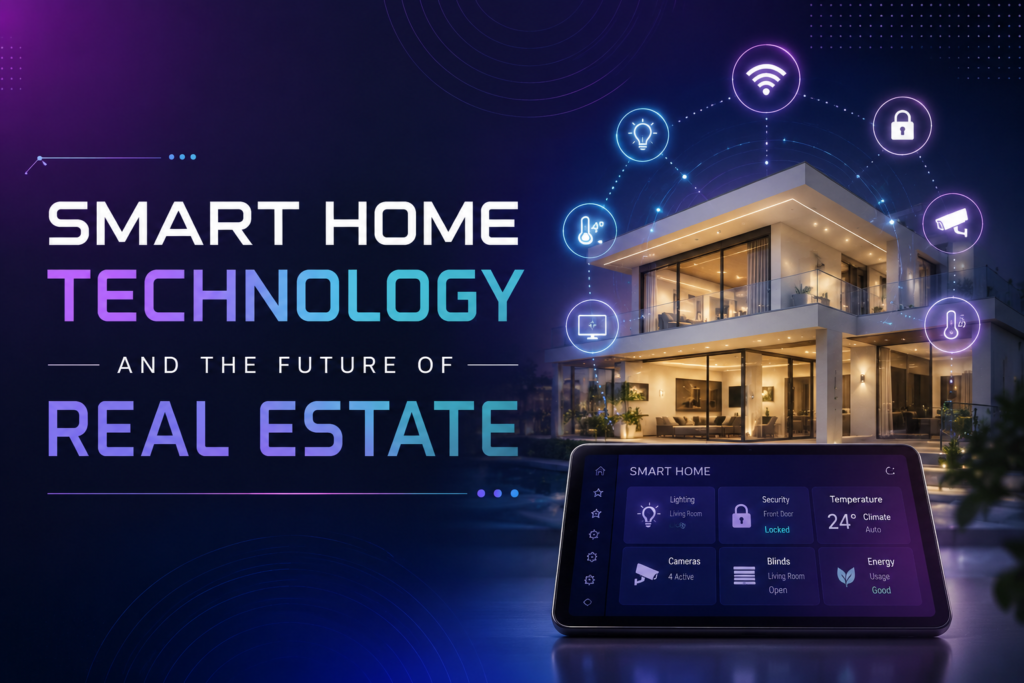
Smart homes use internet-connected devices and automated systems to control various household functions such as lighting, security, temperature, entertainment, and appliances. As technology continues to evolve, smart homes are becoming a key factor influencing property values, buyer preferences, and future real estate developments.
What Is Smart Home Technology?
Smart home technology refers to a network of connected devices that can be monitored, controlled, and automated through smartphones, tablets, voice assistants, or centralized systems.
These technologies enable homeowners to manage different aspects of their homes remotely and efficiently.
Common Smart Home Features
- Smart lighting systems
- Smart door locks
- Video doorbells
- Security cameras
- Smart thermostats
- Voice-controlled assistants
- Automated curtains and blinds
- Smart appliances
- Energy management systems
- Home entertainment integration
These innovations create a more convenient and personalized living experience.
Why Smart Homes Are Becoming Popular
The increasing adoption of smart technology is driven by changing consumer expectations and advancements in digital infrastructure.
1. Convenience and Automation
Homeowners can control lighting, appliances, security systems, and temperature settings from anywhere using mobile devices.
Simple tasks that once required manual effort can now be automated based on schedules or personal preferences.
2. Enhanced Security
Security remains one of the biggest reasons people invest in smart home systems.
Features such as:
- Motion sensors
- Smart locks
- Video surveillance
- Real-time alerts
- Remote monitoring
provide homeowners with greater peace of mind and protection.
3. Energy Efficiency
Smart technology helps reduce energy consumption by optimizing the use of electricity and resources.
Examples include:
- Automated lighting controls
- Smart air-conditioning systems
- Energy monitoring devices
- Intelligent power management
This results in lower utility bills and a more sustainable lifestyle.
4. Better Lifestyle Experience
Smart homes offer a level of comfort and personalization that traditional homes cannot match.
Residents can create customized settings for:
- Lighting moods
- Entertainment systems
- Room temperatures
- Security preferences
creating a seamless living environment.
Key Smart Technologies Shaping the Future of Real Estate
1. Artificial Intelligence (AI)
Artificial intelligence is making smart homes more intelligent and responsive.
AI-powered systems can:
- Learn homeowner preferences
- Adjust lighting automatically
- Optimize energy usage
- Enhance home security
- Provide predictive maintenance alerts
These capabilities improve both convenience and efficiency.
2. Internet of Things (IoT)
The Internet of Things (IoT) connects multiple devices and systems within a home.
Examples include:
- Smart refrigerators
- Connected washing machines
- Security cameras
- Smart speakers
- Intelligent thermostats
IoT allows devices to communicate and work together seamlessly.
3. Voice-Controlled Living
Voice assistants have become an integral part of smart homes.
Residents can control various functions through simple voice commands, including:
- Lighting adjustments
- Music systems
- Temperature controls
- Security checks
- Appliance operations
This hands-free convenience is becoming a standard expectation among modern buyers.
4. Smart Security Systems
Future homes will feature increasingly sophisticated security technologies.
Emerging innovations include:
- Facial recognition access
- Biometric locks
- AI-powered surveillance
- Remote visitor verification
- Advanced intrusion detection
These systems significantly improve home safety.
5. Energy Management and Sustainability
Environmental awareness is encouraging the adoption of sustainable technologies.
Smart homes can monitor and optimize:
- Electricity usage
- Water consumption
- Solar energy generation
- Battery storage systems
This contributes to lower costs and reduced environmental impact.
The Future of Smart Homes in Real Estate
The future of real estate is closely linked with technology innovation.
Experts predict that future residential developments will increasingly incorporate:
- Fully automated homes
- AI-driven property management
- Smart community infrastructure
- Integrated renewable energy systems
- Advanced digital security
- Predictive maintenance solutions
As these technologies become more affordable and accessible, smart homes are expected to become a standard feature rather than a luxury.
Why Smart Homes Matter for Investors
For real estate investors, smart-enabled properties offer several advantages:
- Increased property value
- Stronger rental demand
- Better tenant retention
- Improved marketability
- Future-ready asset positioning
Properties equipped with modern technologies are likely to remain competitive and attractive for years to come.
Conclusion
Smart home technology is revolutionizing the way people live, interact with their homes, and make property purchasing decisions. From enhanced security and energy efficiency to greater convenience and automation, smart homes offer benefits that align perfectly with modern lifestyle expectations.
As technology continues to evolve, its integration into residential real estate will only become stronger. Developers, investors, and homeowners who embrace smart home innovations today are positioning themselves for the future of the property market.