
Introduction
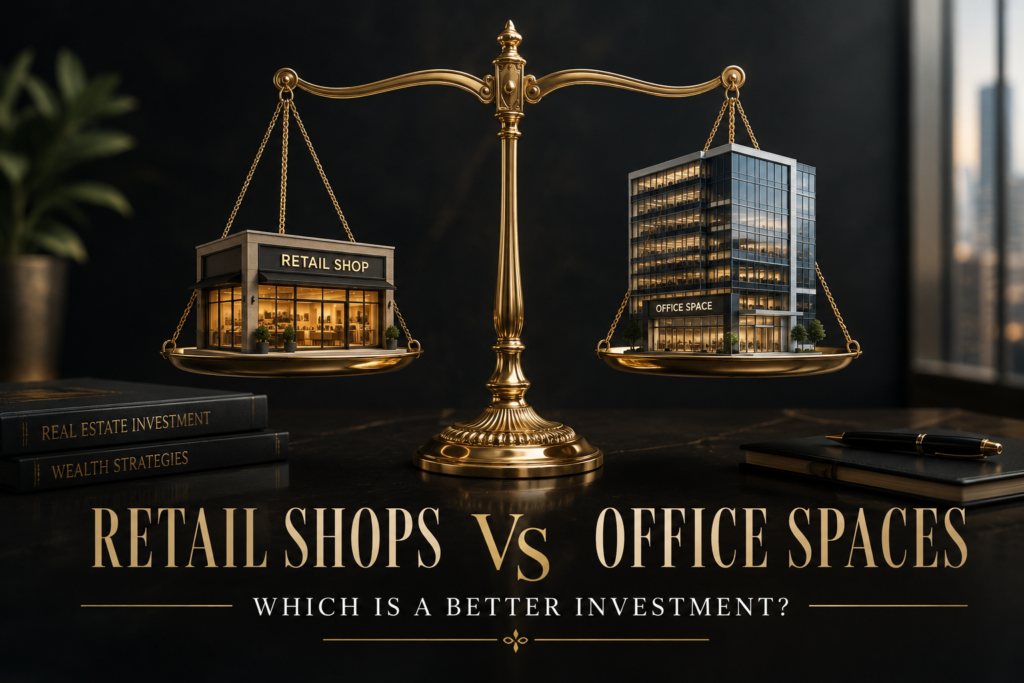
Commercial real estate has become one of the most attractive investment avenues for individuals seeking steady income and long-term wealth creation. Among the various commercial property options available, retail shops and office spaces are two of the most popular choices. Both offer unique advantages and can generate attractive returns, but choosing the right investment depends on your financial goals, risk appetite, and market conditions.
Understanding Retail Shop Investments
Retail shops are commercial spaces leased to businesses that sell products or services directly to customers. These properties are commonly located in shopping complexes, high streets, commercial markets, and mixed-use developments.
Examples of Retail Businesses
- Clothing stores
- Restaurants and cafes
- Grocery stores
- Pharmacies
- Mobile and electronics outlets
- Beauty salons
- Service centers
Retail properties generate income through rental payments made by tenants operating their businesses.
Understanding Office Space Investments
Office spaces are commercial units leased to companies, startups, professionals, and corporate organizations for conducting business operations.
Examples of Office Occupants
- IT companies
- Consulting firms
- Financial services
- Marketing agencies
- Legal professionals
- Co-working operators
- Corporate headquarters
Office properties are generally located in business districts, commercial hubs, and corporate parks.
Comparing Retail Shops and Office Spaces
1. Rental Income Potential
Retail Shops
Retail shops often command higher rental rates per square foot, especially in prime commercial locations with strong foot traffic.
Advantages
- Premium rents in busy markets
- Potential for annual rental increases
- Strong demand in established retail zones
However, rental income may fluctuate depending on consumer spending patterns and business performance.
Office Spaces
Office spaces generally provide stable and predictable rental income through long-term lease agreements.
Advantages
- Consistent monthly income
- Professional tenants
- Longer lease durations
Winner: Retail shops may offer higher rental yields in prime locations, while office spaces provide greater rental stability.
2. Capital Appreciation
Retail Shops
Retail properties located in developing commercial corridors often experience significant appreciation as business activity increases.
Office Spaces
Office properties appreciate steadily, particularly in growing business districts and emerging corporate hubs.
Factors driving appreciation include:
- Infrastructure development
- Business expansion
- Employment growth
- Increased commercial demand
Winner: Both can appreciate well, but retail shops in premium locations often experience faster value growth.
3. Tenant Stability
Retail Shops
Tenant turnover can be higher because retail businesses are influenced by market competition and changing consumer preferences.
Office Spaces
Corporate tenants usually sign longer lease agreements and are more likely to remain in the same location for extended periods.
Benefits include:
- Lower vacancy rates
- Reduced tenant replacement costs
- Stable rental income
Winner: Office spaces offer greater tenant stability.
4. Demand and Market Trends
Retail Shops
Despite the growth of e-commerce, physical retail continues to thrive in many sectors, including:
- Food and beverage
- Healthcare
- Convenience retail
- Lifestyle products
- Essential services
High-footfall locations remain highly desirable for retailers.
Office Spaces
The office market continues to evolve with growing demand from:
- IT companies
- Startups
- Shared workspaces
- Professional service firms
- Expanding businesses
The growth of hybrid work models has influenced office demand, but quality office spaces remain valuable assets.
Winner: Both sectors continue to perform well, depending on location and market demand.
5. Risk Factors
Retail Shop Risks
- Economic slowdowns affecting retail sales
- Tenant turnover
- Changing shopping habits
- Competition from online retail
Office Space Risks
- Market oversupply in some regions
- Economic fluctuations impacting business expansion
- Changes in workplace trends
Winner: Office spaces generally involve slightly lower operational risk due to longer lease commitments.
6. Maintenance and Management
Retail Shops
Retail tenants often customize interiors and may require periodic modifications.
Office Spaces
Office properties usually have structured maintenance systems, especially in commercial complexes and business parks.
Professional management often ensures:
- Better upkeep
- Efficient operations
- Higher tenant satisfaction
Winner: Office spaces are generally easier to manage.
When Should You Invest in Retail Shops?
Retail shops may be the right choice if you:
- Want higher rental yields
- Are investing in high-footfall locations
- Seek faster capital appreciation
- Have a higher risk tolerance
- Want exposure to consumer-driven markets
Retail investments perform best in:
- Shopping destinations
- Mixed-use developments
- High streets
- Growing residential communities
- Commercial marketplaces
When Should You Invest in Office Spaces?
Office spaces may be ideal if you:
- Prefer stable rental income
- Want long-term tenant relationships
- Seek lower vacancy risks
- Prefer predictable cash flow
- Focus on long-term commercial investment
Office investments perform best in:
- Business districts
- IT parks
- Corporate hubs
- Emerging commercial corridors
- Professional service clusters
Conclusion
Both retail shops and office spaces can be profitable commercial real estate investments when selected carefully. Retail shops often provide higher rental yields and stronger appreciation in high-traffic locations, while office spaces offer stability, longer lease terms, and predictable income.
The best investment depends on your financial goals, risk tolerance, and market conditions. Investors seeking aggressive growth may prefer retail properties, while those prioritizing steady returns may find office spaces more suitable.